A qualifying first-time buyer purchasing a home up to RM500,000 could save thousands of ringgit through exemptions on the transfer instrument and loan agreement. With a RM500,000 home and a 90% loan, the two duties would normally total RM11,250 under the rates used in this example.

What is MOT stamp duty?
The Memorandum of Transfer, or MOT, is associated with transferring ownership. Buyers often use “MOT” to mean the transfer stamp duty, but the document and the tax are separate things. The lawyer will confirm the applicable transfer instrument for your transaction.
For these examples, transfer duty is 1% on the first RM100,000 and 2% on the next amount up to RM500,000. Loan agreement duty is 0.5% of the loan principal.
How much could you save?
| Home price | Loan at 90% | Transfer duty before exemption | Loan duty before exemption | Combined saving if fully exempt |
|---|---|---|---|---|
| RM300,000 | RM270,000 | RM5,000 | RM1,350 | RM6,350 |
| RM400,000 | RM360,000 | RM7,000 | RM1,800 | RM8,800 |
| RM500,000 | RM450,000 | RM9,000 | RM2,250 | RM11,250 |
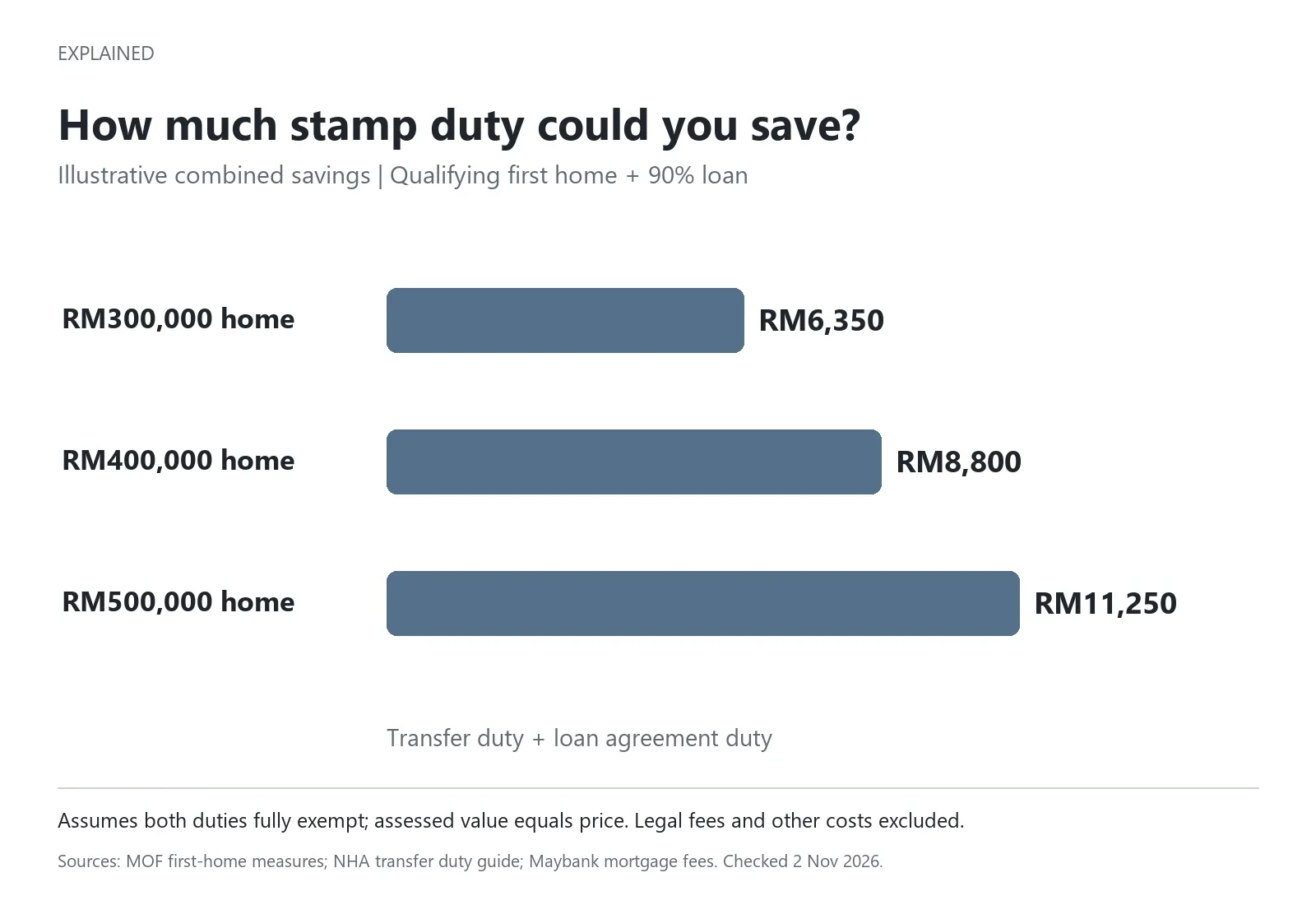
The calculations assume the purchase price equals the value used for duty assessment. Transfer duty can depend on the higher of consideration and assessed market value, so the final assessment may differ.
Who needs to check eligibility carefully?
The first-home relief is for qualifying Malaysian citizens. Previous residential ownership, including joint ownership or property received through a gift or inheritance, can affect eligibility. Property classification also matters. Do not assume a serviced apartment, SOHO or other commercial-title product qualifies because it is marketed for residential use.
Budget 2026 announced an extension for qualifying sale and purchase agreements signed from 1 January 2026 to 31 December 2027. LHDN's published response on that extension confirms that the existing qualifying conditions continue to apply. Ask the conveyancing lawyer to identify the operative exemption order for your transaction.
What about homes above RM500,000?
Budget 2027 proposes full relief for the first RM500,000 and 50% relief on the remaining portion for qualifying first homes up to RM750,000, with the proposed agreement period running from 1 January 2027 to 31 December 2030.
As at 2 November 2026, this article treats that expanded tier as a proposal; its implementing legal status was not established in the research. Do not include the proposed saving as confirmed cash available until your lawyer verifies the operative rules.
Does the exemption remove every upfront cost?
No. The down payment, legal fees, valuation, disbursements and work needed before moving in remain separate. Keep any duty saving as part of a complete cash budget rather than treating it as permission to stretch the purchase price.
Sources and data notes
- Ministry of Finance: Budget 2026 Tax Measures, Appendix 15.
- LHDN: response to the Joint Memorandum on Issues Arising from the 2026 Budget Speech and Tax Bills 2025, first-home exemption section.
- Ministry of Finance: Budget 2027 speech, first-home stamp duty proposal.
- National House Buyers Association: Property Transaction Fees; Maybank: Mortgage Banking Fees.
- Illustrative calculations prepared for this guide; assumptions stated above. Policy checked 2 November 2026.